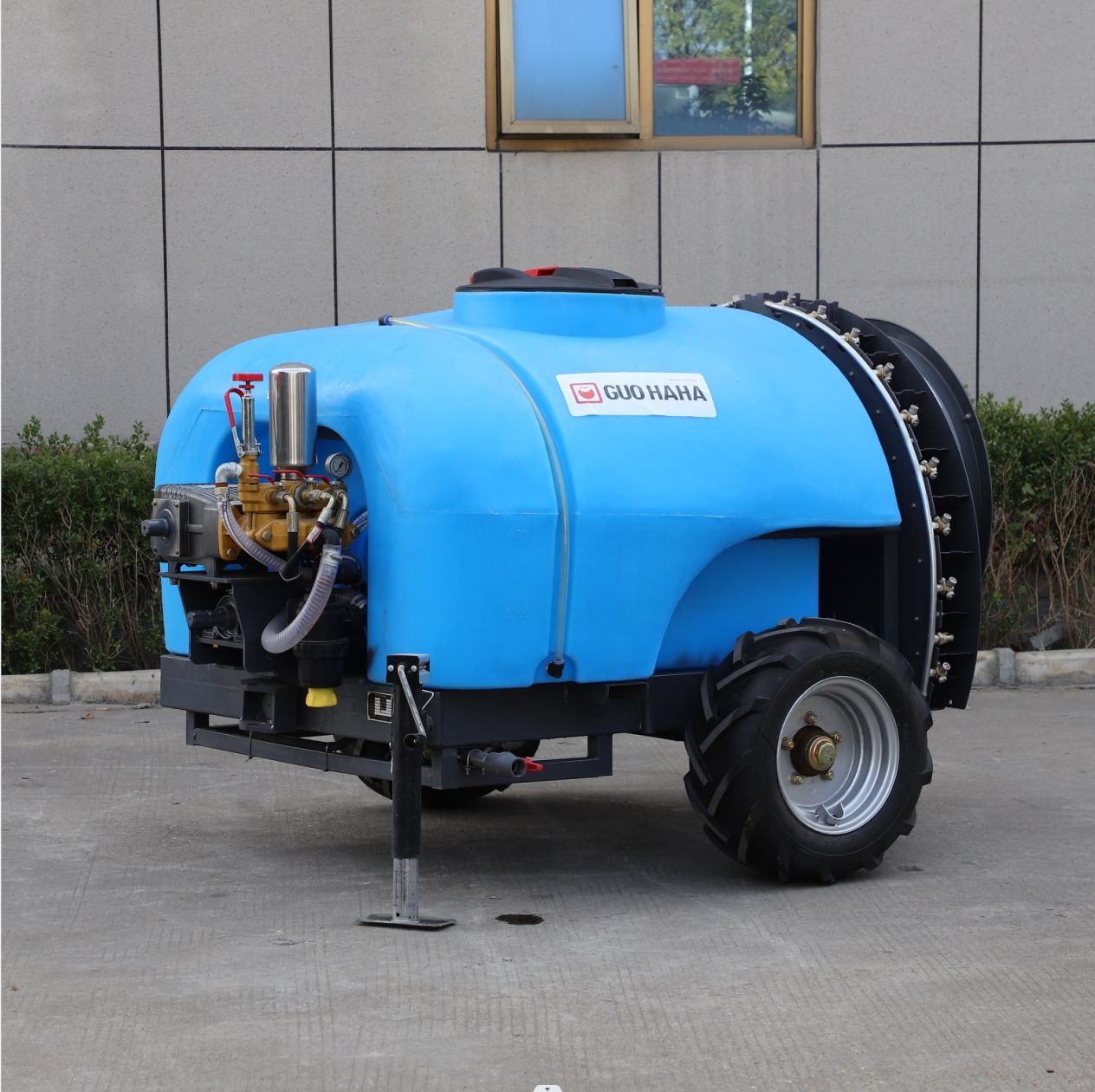
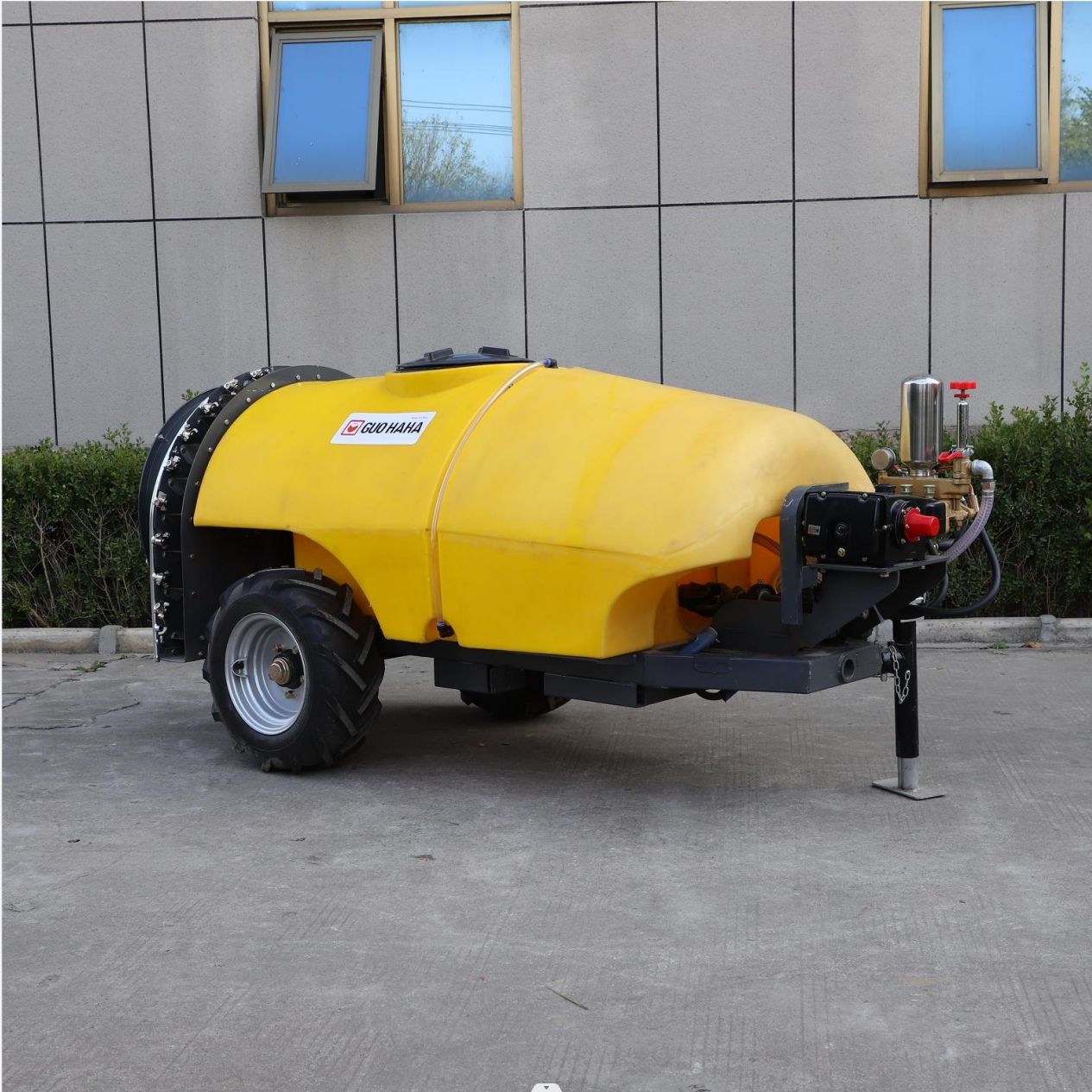
A 1,000 L trailed sprayer weighs close to 1.4 tonnes loaded. On a wet headland that weight goes through two tyres and a chain drive, and none of those parts give any warning until they do. Checking them takes twenty minutes a month.
Tyre pressure is a traction setting
Running tyres at road pressure in the field is the most common mistake. A 10.0/75-15.3 implement tyre at 4 bar has a small contact patch and cuts into wet ground; at 2 bar it floats and grips. Set pressure for the field before the season and raise it only for road transport over 20 km.
- Check pressure cold; a tyre warmed by 30 minutes of work reads 0.3 bar high.
- Look for shoulder cracking, which is a sign of running under-inflated on the road.
- Torque wheel nuts after the first day of work and again at 50 hours.
Chain tension and lubrication
A drive chain that is too tight loads the bearings; one that is too loose whips and wears the sprocket teeth on one side. Set the slack per the manual, then check it again after the first hour because a new chain stretches. Use a dry chain lubricant in dusty orchards: oil attracts grit and turns into grinding paste.
Listen at walking pace. A rhythmic click that follows wheel rotation is a tight link; a rumble that appears only under load is a bearing. Both are cheap now and expensive after the axle housing wears.
The axle does not fail on the road. It fails in the third wet week, with a full tank.
Axle and hub checks
Jack one side at a time, hold the wheel at twelve and six o'clock and rock it. Any movement means a bearing or a stub axle problem. Grease the hubs at the interval in the manual and check the seals: a weeping seal lets water in, and water in a bearing is a failure with a date on it.
Road transport rules that save tyres
A trailed sprayer towed at 30 km/h on tyres set for field work will overheat the sidewalls within an hour. Raise pressure for the road, empty the tank, and keep the boom locked in its transport cradle. The five minutes this takes is cheaper than a tyre.
Check the drawbar height against the tractor's hitch. A drawbar that sits high puts the trailer nose up and loads the rear axle unevenly; one that sits low lifts the tractor's rear wheels on braking. Both show up as uneven tyre wear long before anything breaks.
Wash the machine after every wet-ground week. Mud packed around the axle seals holds moisture against the metal and is the single most common cause of a bearing failure that looks like a manufacturing fault but is not. Note the tyre pressures you settled on, and the date. Next season the note answers the question the gauge cannot.
Chains, sprockets, tyres, hubs and bearings are stocked for the trailed range. Tell us your model and tyre size for a parts quote, or start with the 2,000 L trailed sprayer.