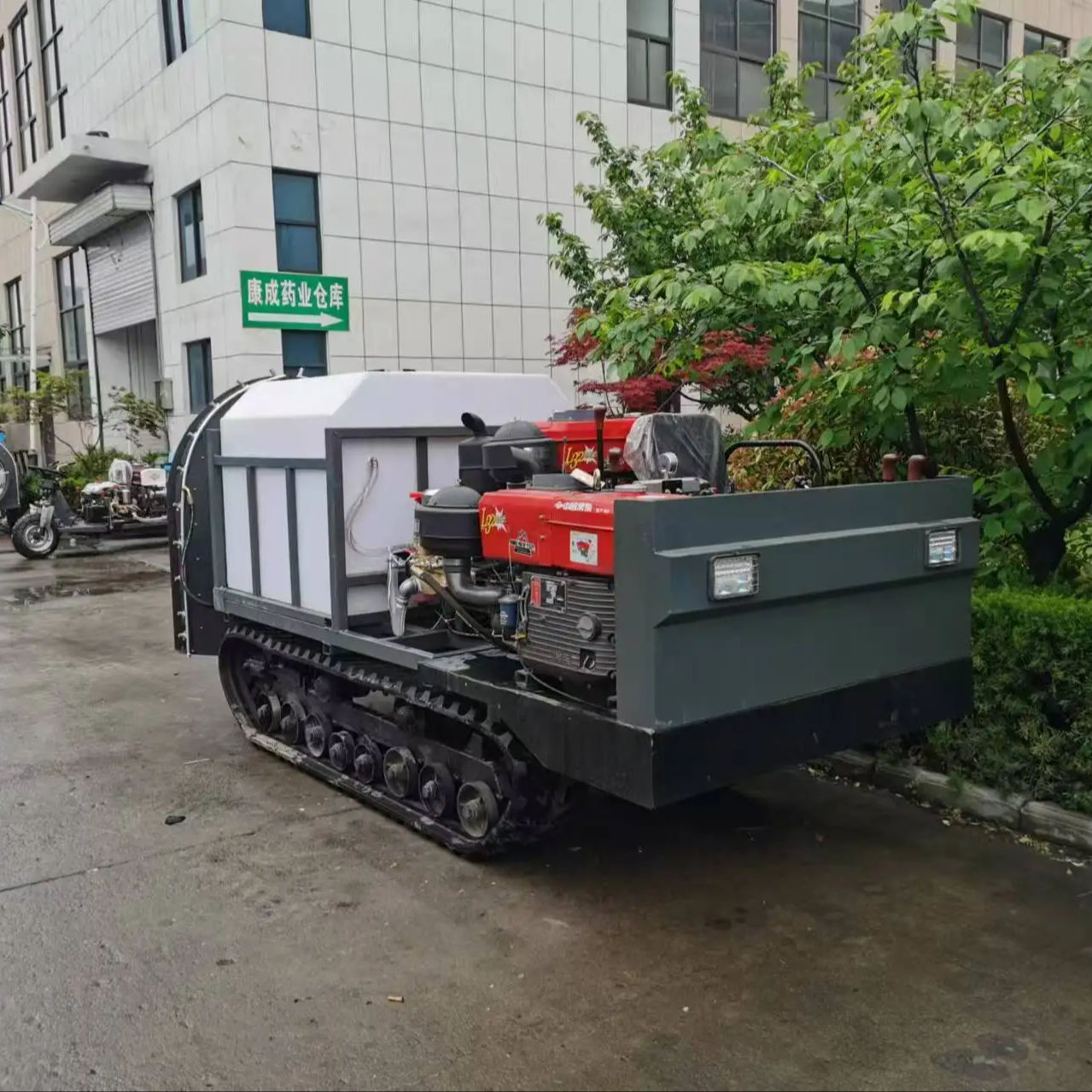
A 1,000 L crawler sprayer looks like a 600 L machine with a bigger drum. It is not. The extra 400 L sits low between the tracks, which is exactly where a tracked machine needs weight, and it removes between two and three refill stops on a normal orchard block. Those stops are the part of spraying nobody budgets for.
The refill maths on a tracked chassis
Orchard air-blast work usually runs 250 L to 400 L per hectare depending on canopy density. A 600 L tank at 300 L per hectare covers two hectares; a 1,000 L tank covers three and a third. On a 12 hectare block with the water point at the packing shed, that is four trips against six, and the tracked machine is slow on the road by design.
- Fewer road moves: the tank lasts a full morning on most blocks under 10 hectares.
- Steadier weight distribution: water sits over the track centre line, not behind the rear axle.
- Less agitation loss: a larger tank keeps the same concentration with a gentler paddle speed.
Where the extra weight helps and where it does not
On a 20 to 25 degree slope, the added water mass increases track grip on the uphill side and reduces the chance of the uphill track lifting when the boom swings out. On soft ground after rain, the same mass increases sinkage; the answer there is wider tracks or a lighter fill, not a bigger tank.
Track pressure matters more than total weight. A 1,000 L machine on 300 mm rubber tracks spreads its load over a longer footprint than a wheeled tractor of the same mass, which is why it can enter a wet orchard that a tractor would rut.
On tracks, the tank is not a container. It is part of the ballast.
What to check before specifying the larger tank
Frame welds at the tank saddle, the pump's rated flow at the higher head, and the fill time from a 2 inch line. A 1,000 L tank filled through a 1 inch hose takes about four times as long as the same volume through 2 inch, and that erases part of the gain.
Loading, transport and the trailer question
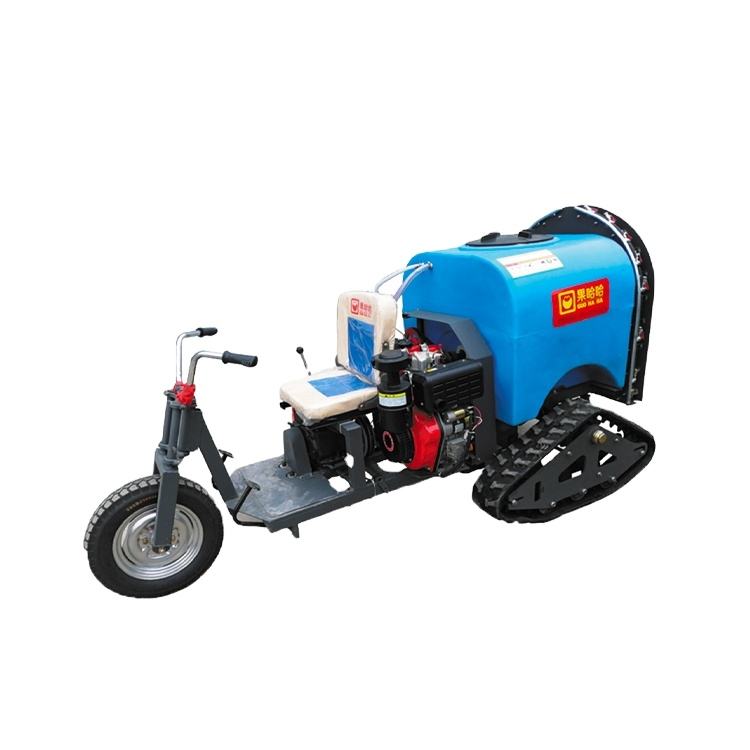
A 1,000 L crawler is not a road machine. Between blocks it usually travels on a flatbed trailer, and the tank should be empty for that move: 1,000 kg of water raises the trailer's centre of gravity and puts the tie-down points under load they were not designed for. Four straps at the track corners, crossed front and rear, is the minimum.
On site, the machine's own travel speed of 4 to 6 km/h covers the distance between rows faster than unloading a wheeled unit and driving it through a gate. That is the hidden gain: fewer machines moved, fewer gates opened, less crop damage at the headland.
Compare the 1,000 L crawler sprayer with the 600 L model and the 300 L full-track unit, or send us your row spacing for a recommendation.