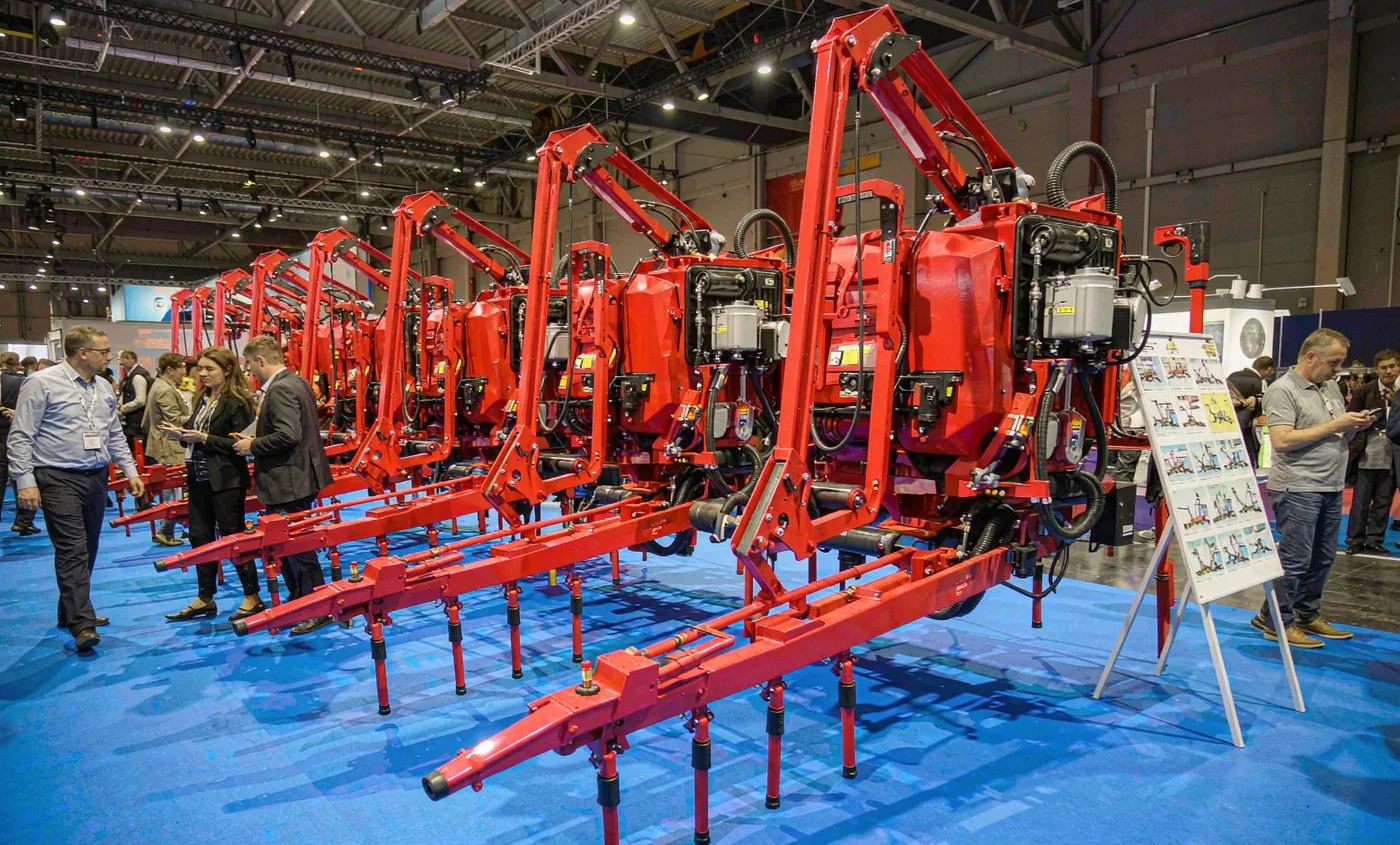
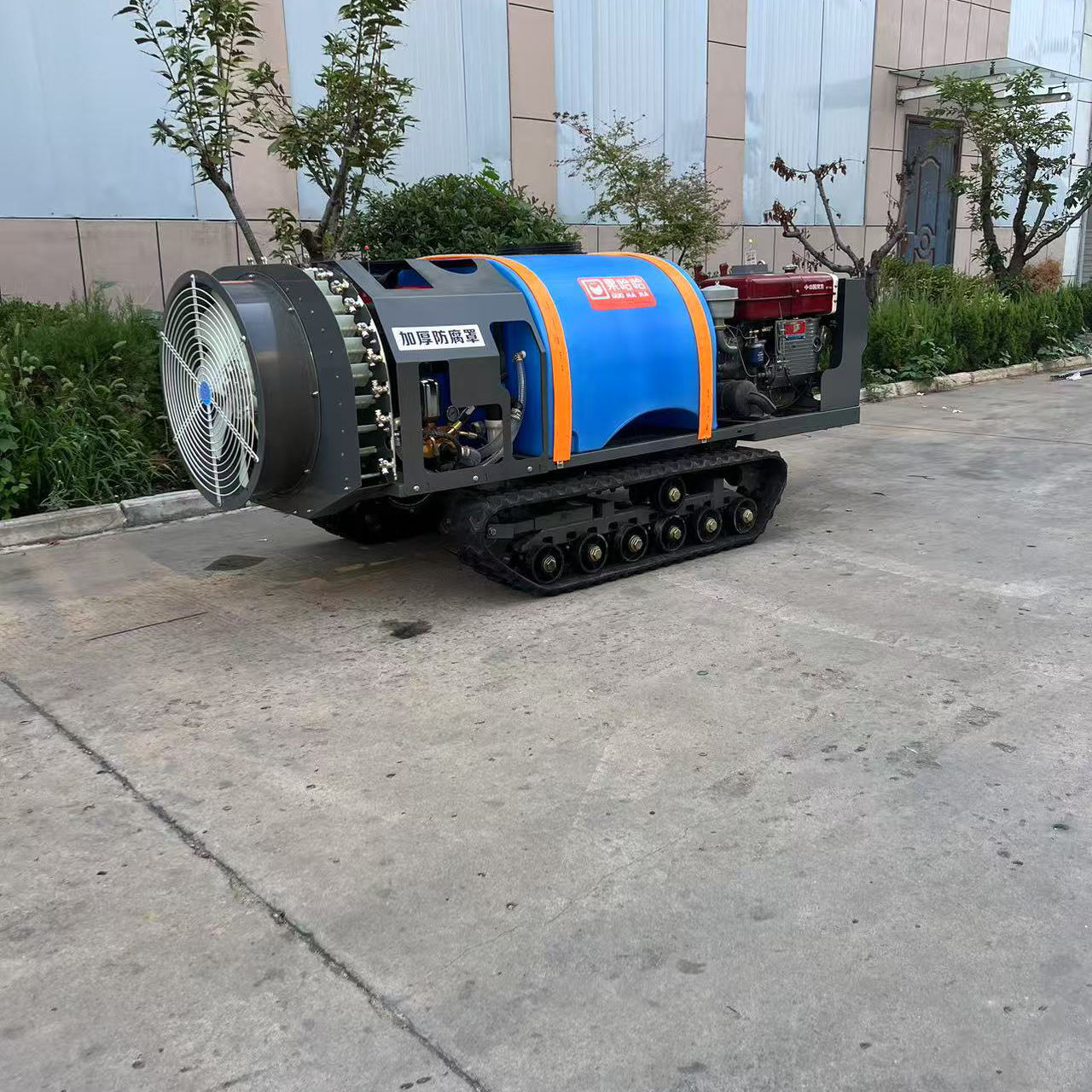
Vineyard canopies are tall, narrow and open underneath. An air-blast head set up for a mango tree throws air too high and too wide for that shape, so the spray ends up on the outer leaf wall and the drive. The fix is usually two parts, not a new machine: a tighter air duct and a wind net.
What the air duct actually does
The duct shapes the air leaving the fan into a vertical curtain instead of a cone. A pressed two-piece duct holds its section under load better than a welded box, and it can be replaced in the field with four bolts when a branch bends it.
- Narrower duct: a taller, thinner air curtain for trellised vines.
- Wider duct: more lateral throw for open orchard canopies.
- Both are reversible, so one machine can serve two crops in the same season.
The wind net is a drift control device
A wind net sits on the outer edge of the air outlet and breaks the outermost part of the air stream. The effect is a softer plume that stays inside the canopy instead of curling over the row. On a block beside a road or a neighbouring crop, that is the difference between spraying at 6 a.m. and waiting for the afternoon.
Net weave density matters. Too open and it does nothing; too dense and it costs air volume that the inner canopy needs. The practical range for vineyard work is 130 to 180 grams per square metre with a double-stitched hem, which also survives the branch contact that destroys a single-stitch net in one season.
You do not need a second sprayer for a second crop. You need the right two parts.
Fitting and checking
Fit the duct first, then the net, then re-calibrate with water-sensitive cards. Expect the nozzle positions to change: a vertical curtain usually needs fewer nozzles higher up and a wider angle lower down.
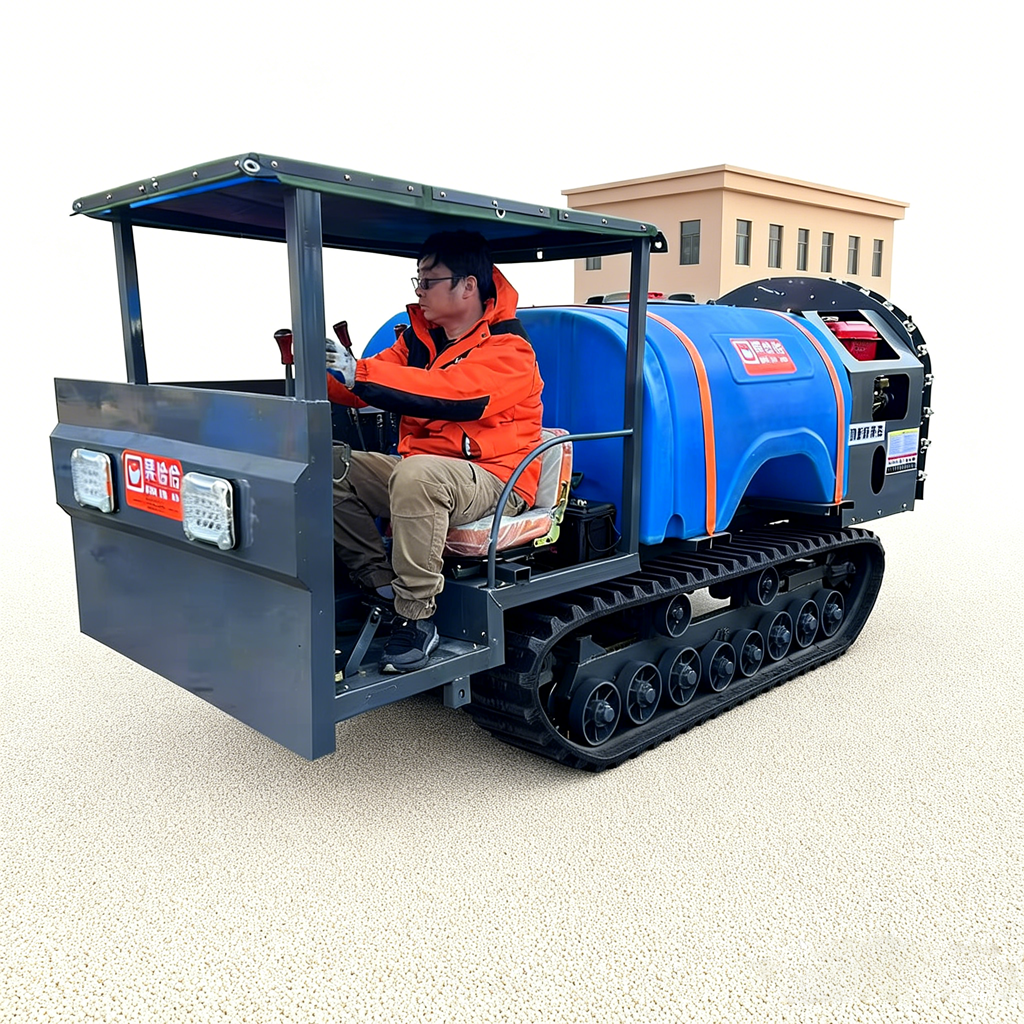
Nozzle layout after the upgrade
A vertical air curtain changes where the spray needs to be released. Most vineyard heads end up with four to six nozzle positions instead of eight, with the upper two angled slightly downward so the curtain folds into the fruit zone rather than over the top wire. Fewer active nozzles at the same total flow means larger tips and coarser droplets, which is the second gain from the change.
Re-check the pressure at the head, not at the gauge. Long hose runs to an elevated duct lose 1 to 2 bar, and a nozzle chart based on the pump gauge will over-apply the top of the canopy.
Keep the original duct and net. A machine sold second-hand with both sets is worth more, and a grower who changes crops can switch back in an afternoon rather than ordering parts. A machine that sprays vines in spring and mangoes in autumn justifies both duct sets; the changeover is four bolts and one recalibration pass.
Air ducts, wind nets and mounting frames are available for the 1,000 L crawler sprayer and most trailed models. Send us a photo of your existing head and we will match the parts.