Greenhouse spraying has always been limited by the aisle, not by the crop. Walkways between tomato or cucumber rows are commonly 70 cm to 90 cm, which rules out every tractor-mounted machine and most walk-behind units. That is why the backpack sprayer survived so long, and why a purpose-built narrow chassis changes the labour calculation.
The width is the whole product
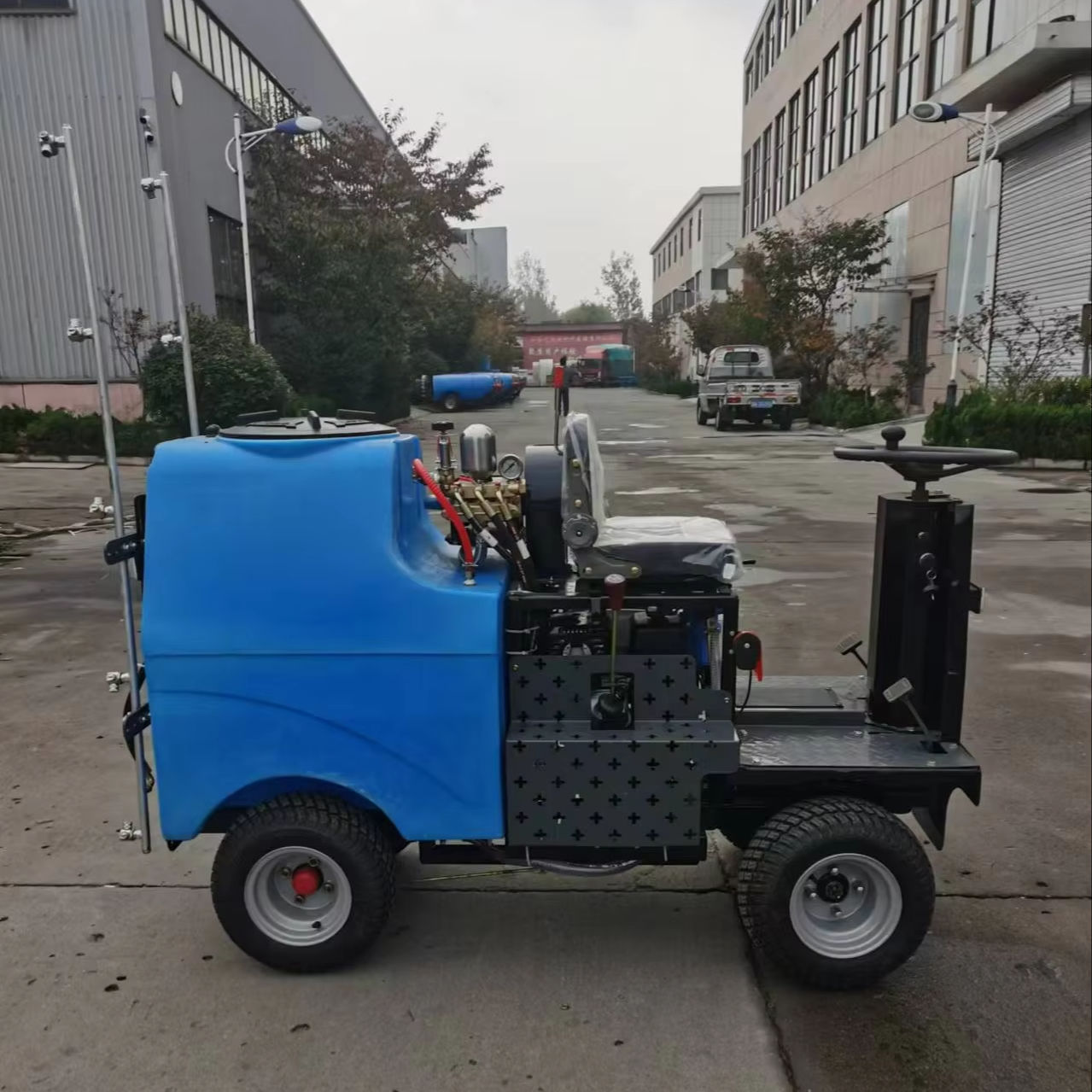
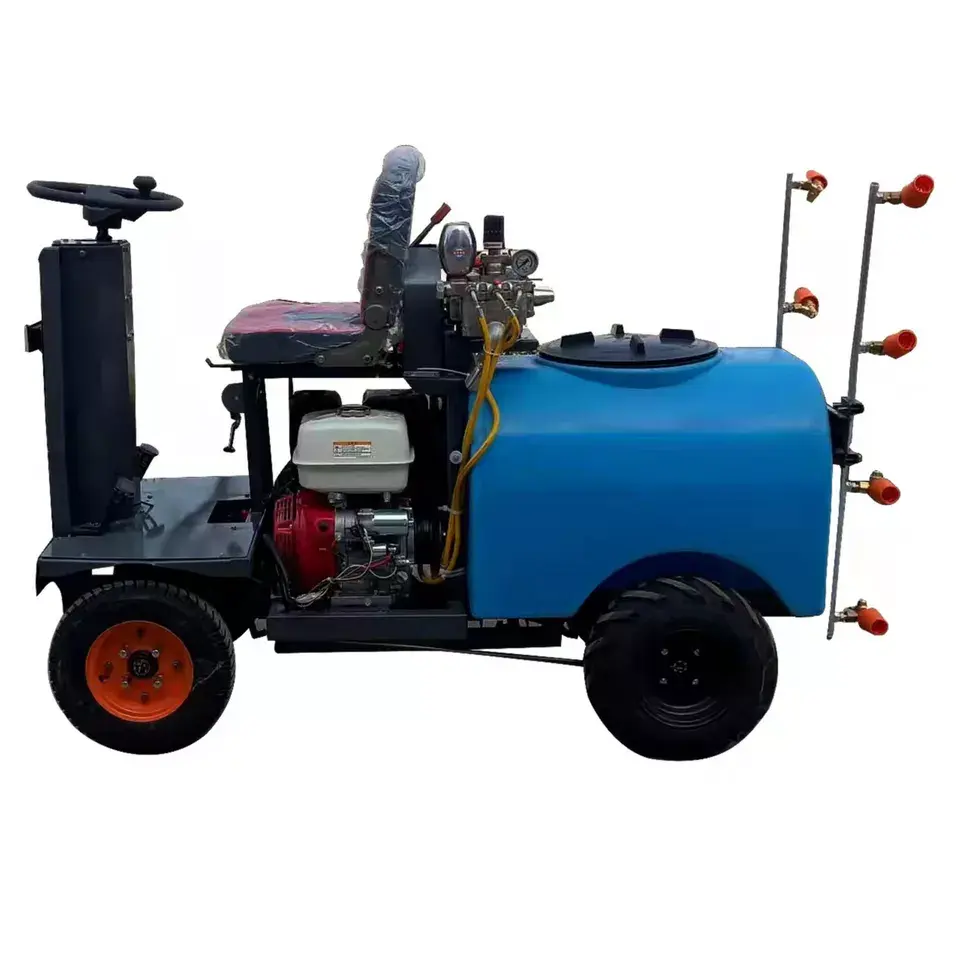
At 70 cm across the wheels, a narrow self-propelled sprayer drives the same path an operator walks. The tank sits low between the wheels, the boom or air head is carried on a vertical mast, and the machine turns at the end of the bay without touching the crop wire. Nothing is folded, because nothing is wider than the aisle.
- 70 cm overall width clears standard 70 to 90 cm walkways.
- 200 L to 300 L covers 4,000 to 6,000 square metres of canopy per fill.
- Vertical spray mast reaches the top wire without a ladder or a second pass.
What changes for the operator
A backpack unit puts 15 kg to 20 kg on the shoulders and exposes the operator to the spray cloud for the whole pass. A narrow rider machine puts the operator above and behind the nozzle line, with the fan pushing air forward. In a 100 m bay the difference is one pass instead of three rest stops.
The other change is timing. Because the machine is quick to refill and quick to turn, spraying can be moved to the cooler part of the day, which matters more for fruit set than any nozzle choice.
In a greenhouse you are not buying horsepower. You are buying a chassis that fits.
Machines that suit gutter-connected houses
For plastic tunnels and older glasshouses with uneven floors, a lighter 200 L unit with pneumatic tyres is easier on the concrete and the crop rows. For gutter-connected houses with level paths, a 300 L machine with a wider track and a taller mast covers more area per hour.
Chemical use and residue in closed houses
A greenhouse is a closed volume, so the same dose per hectare produces a higher airborne concentration than in an orchard. Narrow machines help here because the nozzle line is close to the canopy and the fan does not need to fill the whole house. In practice growers report 15 to 25 percent less spray volume for the same coverage after switching from a backpack to a calibrated narrow machine.
Ventilation timing matters as much as the machine. Spray in the cooler part of the day with the vents closed, then ventilate once the deposit has dried. Spraying into an open vent carries the cloud out of the house and onto the next one.
One practical limit: a narrow machine needs a level path. Where the concrete is broken or the soil floor is soft after irrigation, a 70 cm chassis with small wheels will struggle before it runs out of power. Check the floor condition along the full length of the bay before choosing wheel size, and consider a unit with a wider tyre and a lower mast rather than more horsepower.
Ask us for the aisle width and bay length of your house, and we will confirm whether the 300 L narrow sprayer or the 200 L model fits. Both are built to order with your voltage and pump.