In tropical orchards the spraying window is short. By mid-morning the leaf temperature is high enough that a fine droplet evaporates before it spreads, and by early afternoon the wind usually picks up. The practical window is two to three hours after dawn and, on some farms, a second window after 4 p.m.
Heat changes the droplet, not the dose
A 150 micron droplet falling through 35 degree air loses a measurable part of its volume before it lands. The dose on the label does not change, but the deposit on the leaf does. Coarser droplets from an air-induction tip survive the trip better, and a spreader or sticker keeps the deposit from drying into a crystal that washes off in the first rain.
- Spray before 9 a.m. where the disease pressure allows it.
- Use coarser droplets in high heat, finer only in closed canopies early in the day.
- Check water hardness: high calcium water ties up some formulations and blocks filters.
Canopy structure in mango and grape
Mango trees are tall and open, so the air head has to reach 5 to 6 m with enough volume to turn the leaves. Grapes on a trellis are the opposite: a narrow vertical wall that needs a vertical air curtain and a wind net to keep the spray off the next row. One machine can do both if the duct and deflectors are adjustable.
For grapes, the pass speed matters as much as the nozzle. Above 4 km/h the air stream starts to strip the deposit it has just placed on the upwind side of the row.
In the tropics you are not fighting the pest first. You are fighting evaporation.
Machine choices that suit the climate
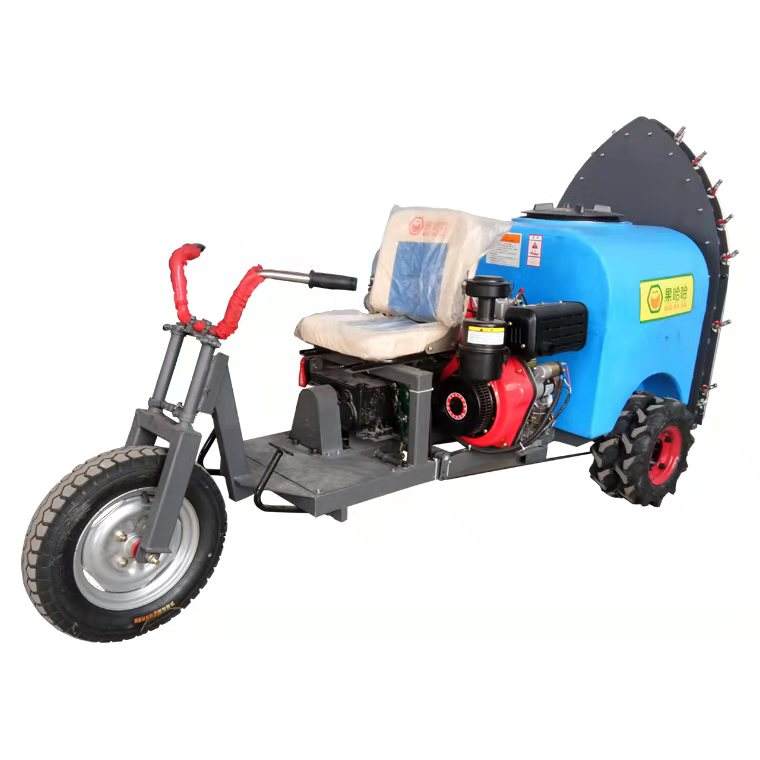
A water-cooled diesel on a self-propelled chassis holds working temperature through a long day, and a larger radiator screen that can be brushed clean matters more than an extra 5 hp. Keep the hydraulic oil cooler clear of blossom and dust, and check the air filter daily during flowering.
Disease timing and the spraying calendar
In tropical orchards the calendar is driven by rainfall rather than by season. The critical windows are the two weeks after pruning, the flowering period and the month before harvest. Each needs a different droplet size: finer for flowering to reach inside the truss, coarser before harvest to avoid residue on the fruit surface.
Build the nozzle set around those three windows and label them. A single set used all season is either too fine at flowering or too coarse at harvest, and the cost shows up as either poor coverage or a rejected load.
Keep a spare set of nozzle tips in the cab during the hot months. Heat and abrasive powders wear tips faster than the hour meter suggests, and a mid-block tip change costs ten minutes against a spoiled pass.
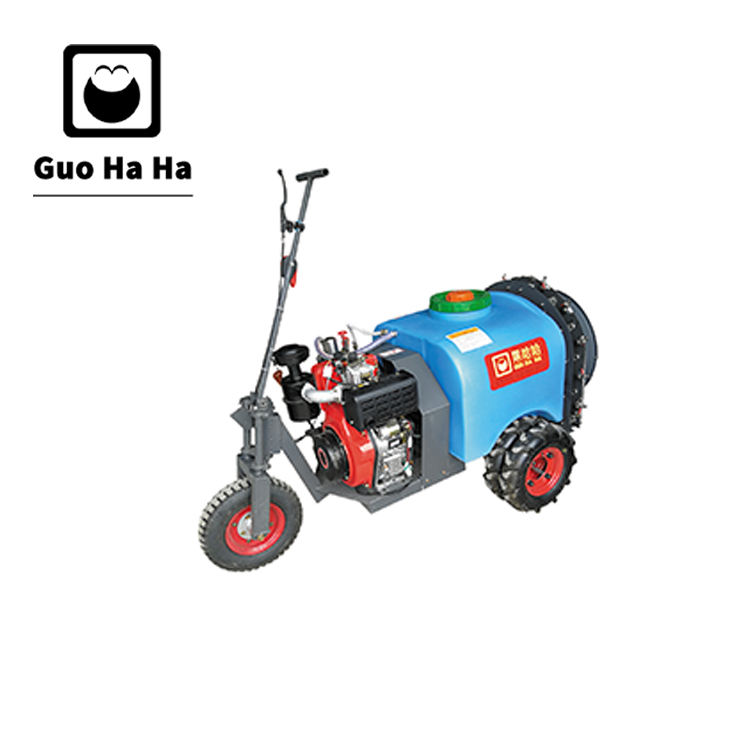
Tell us the crop, the row spacing and the daytime temperature range, and we will recommend the head and nozzle set. See the mango and grape sprayer and the 300 L self-propelled model.