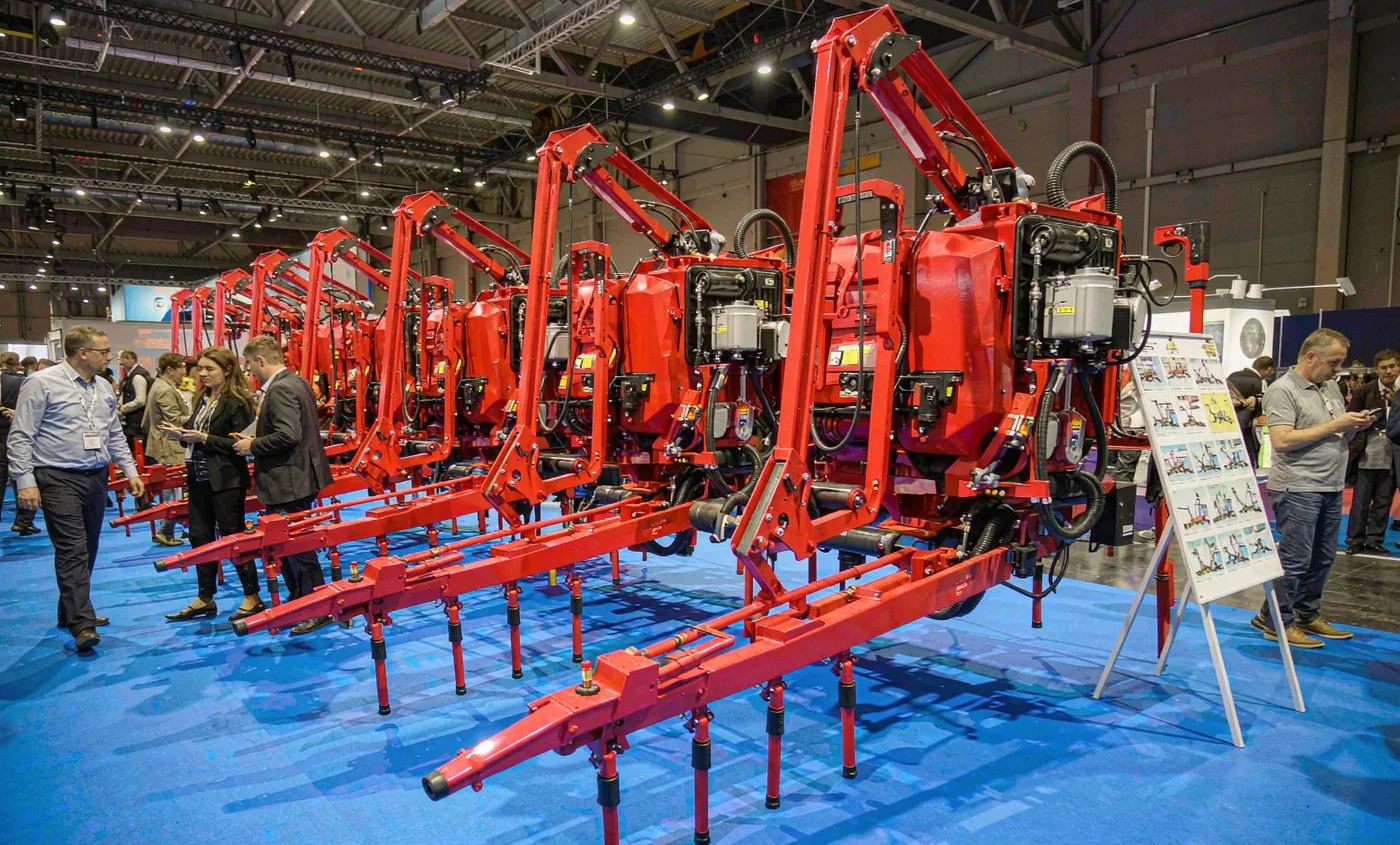
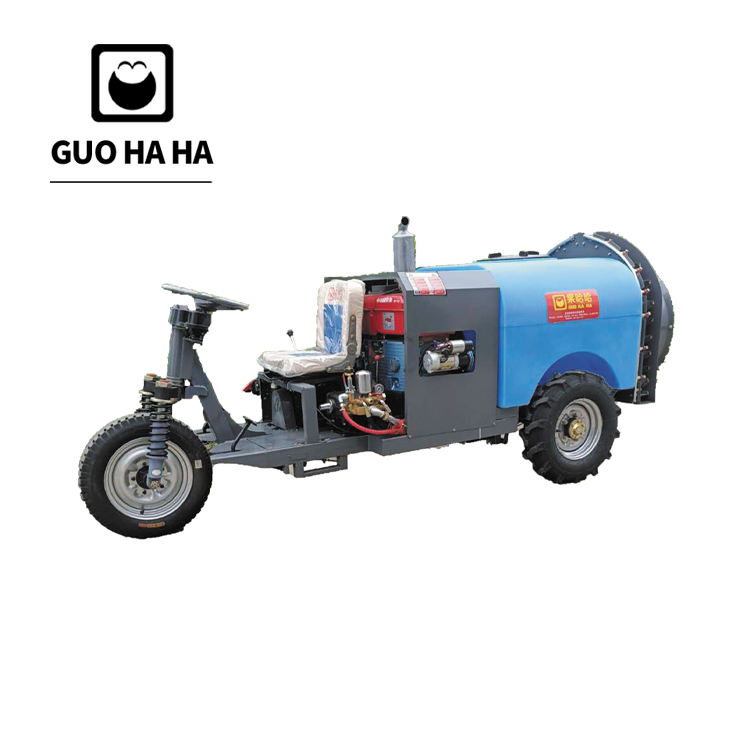
Two growers compare sprayers. One has a 300 L tank, the other a 500 L tank, and both apply 300 L per hectare. The first covers one hectare per fill, the second one and two thirds. On a 15 hectare block that is 15 stops against 9, and every stop costs the same fifteen minutes whether the tank is big or small.
The arithmetic nobody puts on the brochure
Working time equals spraying time plus refill time. If a hectare takes 40 minutes to spray and a refill takes 15 minutes including the drive, then a 300 L machine spends 55 minutes per hectare and a 500 L machine spends 49. Over a 15 hectare block that is one and a half hours, which is a full pass on the following block.
- Hectares per fill equals tank litres divided by litres per hectare.
- Refill time includes travel to water, filling, rinsing and returning.
- A larger tank only pays if the water point is more than a few minutes away.
Where a small tank is not a penalty
If the water point is at the headland, a 300 L tank refills in six minutes and the difference largely disappears. Small tanks also keep the machine light enough for wet ground and cheap enough to run on a 45 hp tractor. The correct answer depends on the farm layout, which is why we ask for the distance to water before quoting a tank size.
There is also a chemical argument. A tank that is emptied within a few hours keeps the mix in suspension and reduces the risk of residue settling in the corners overnight.
Litres per tank is a specification. Hectares per fill is the working number.
Matching the machine to the block
For blocks under 8 hectares with water on site, 300 L is usually enough. For 15 to 30 hectares with a distant water point, 500 L to 600 L pays for itself in one season. Above that, a trailed 1,000 L or 2,000 L unit with its own pump is the practical choice.
A worked example: 15 hectares, 4 m rows
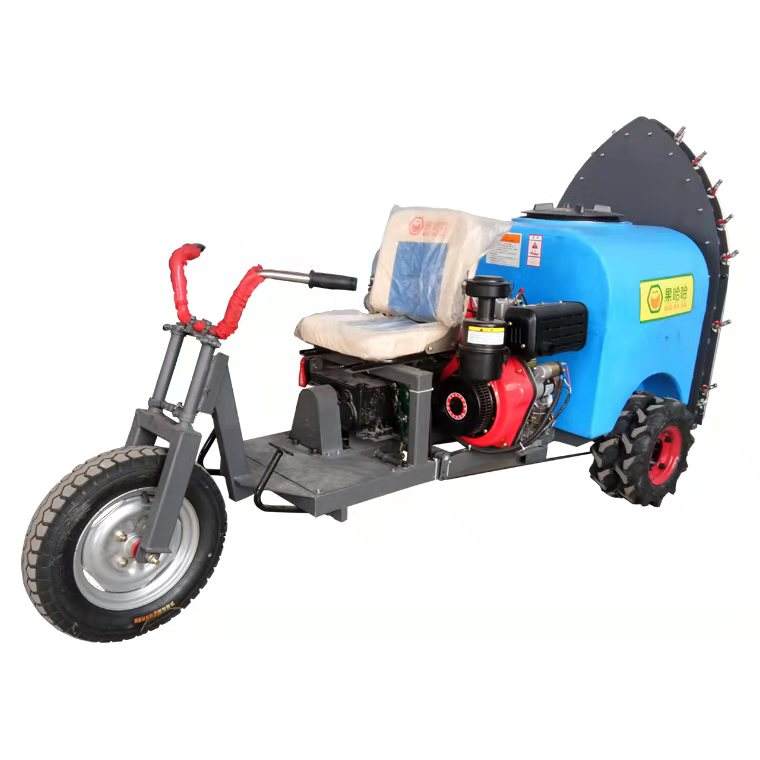
Fifteen hectares at 300 L per hectare needs 4,500 L of mix. A 300 L machine makes 15 fills, a 500 L machine 9, and a 1,000 L trailed unit 5. If each fill costs 12 minutes including travel, the difference between the 300 L and the 1,000 L machine is two hours per block — about one extra block per week during the season.
Put the same numbers against a 2,000 L trailed unit and the fill count drops to three, but the machine is heavier and slower to turn in a 4 m row. Above about 30 hectares the trailed unit wins clearly; below 10 hectares the small self-propelled machine usually finishes first.
Measure the actual refill time on your farm before deciding. Most growers overestimate their water pressure and underestimate the walk from the machine to the tap, and the two errors do not cancel out.
Tell us the block size and the distance to your water point, and we will model the refill cycle for the 300 L and 500 L self-propelled machines.