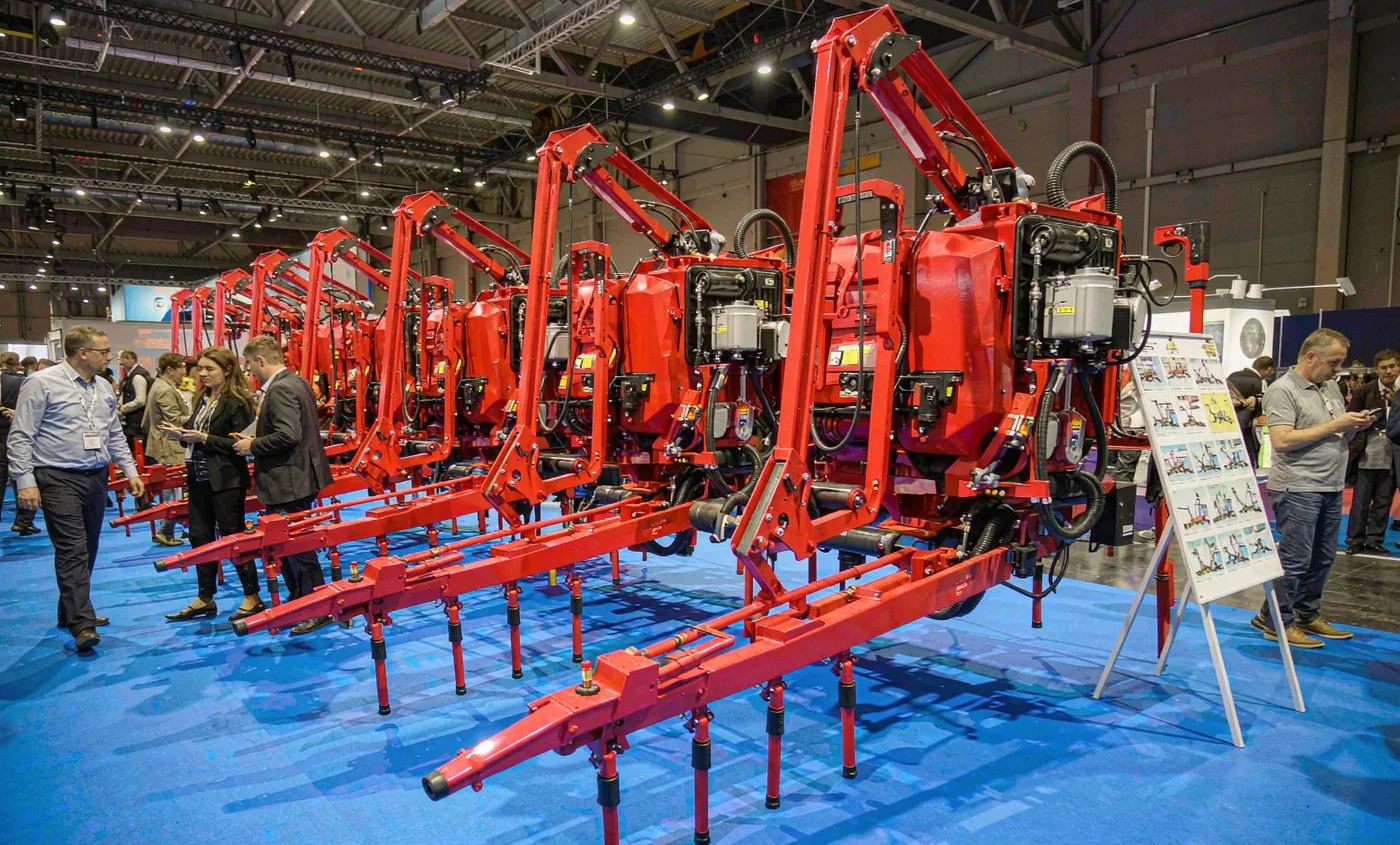
Terraced orchards and hillside tea gardens share one constraint: the path between rows is narrow, steep and often wet. A wheeled mini dumper that works well on a 15 degree track will spin on a 30 degree one, and a machine that spins on a slope is a machine that slides.
Why tracks hold where wheels slip
Rubber tracks put the whole underside of the machine in contact with the ground, so the grip comes from length rather than from a contact patch the size of a hand. On wet clay that is the difference between climbing and digging four ruts. It also lowers ground pressure enough that the row does not need repairing after every pass.
- Ground pressure under 30 kPa on 230 mm tracks at typical loads.
- Grip is proportional to track length, so long tracks beat wide tracks on a climb.
- Low centre of gravity matters more than engine size above 25 degrees.
Load placement decides the outcome
A tracked carrier is stable only while the load sits between the track centres. Put a 200 L sprayer tank on the rear deck and the centre of gravity moves back; on a descent that is useful, on a climb it lifts the front idler and the machine starts to walk. The practical rule is to keep the heaviest item over the middle of the track footprint and to travel uphill with the load low.
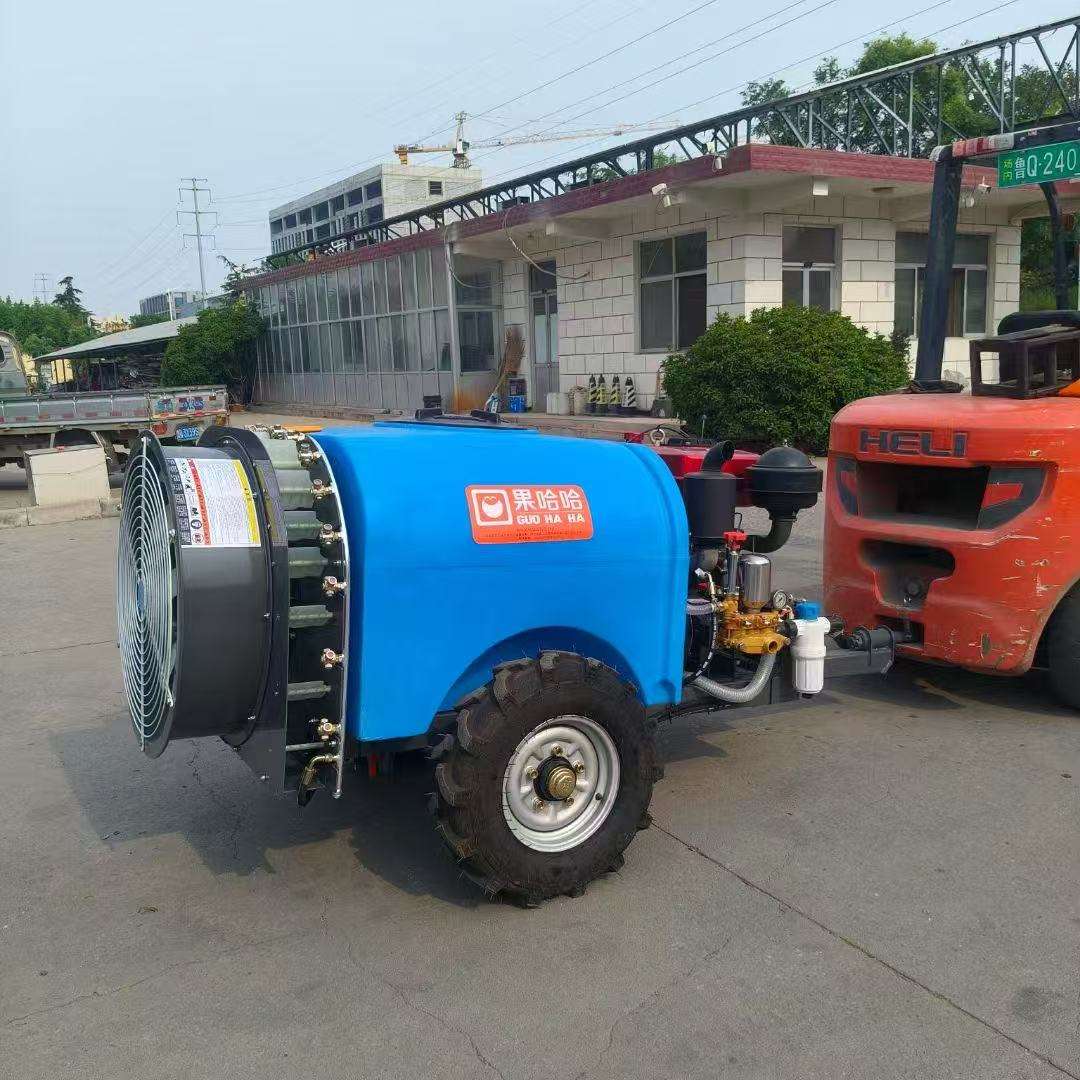
For spraying work, a vehicle-mounted pump sprayer on a tracked carrier gives one pass for both transport and application, which removes the second trip that a dumper and a backpack team would need.
On a 30 degree slope, the machine that wins is the one nobody has to chase.
Safety items worth specifying
A mechanical parking brake that holds on a slope, a dead-man return on the remote, and a track tension check point that can be reached without lifting the machine. Add a rops frame if an operator rides, and a lanyard point if the remote is used from outside the row.
Maintenance on a tracked carrier
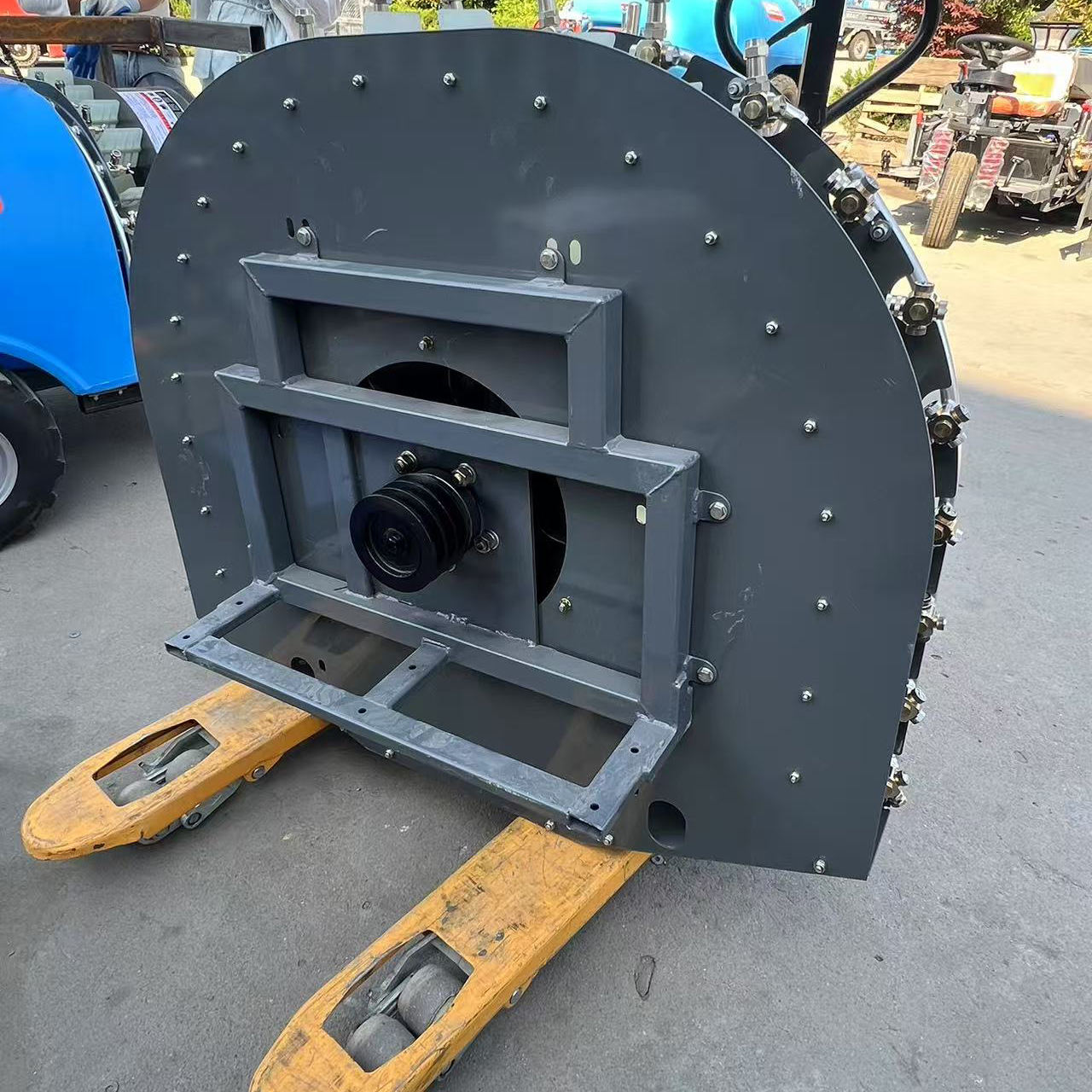
Tracks and undercarriage take more attention than wheels, and the work is simple if it is regular. Clean the track frames after every wet day, check tension cold once a week, and look at the sprocket teeth at every service. A tracked carrier on a slope also loads its final drives harder than a wheeled machine, so check the oil level in the final drives monthly rather than at the annual service.
Keep a spare track pin and a joining link on the farm. A track that comes off 800 m up a row is a two-hour recovery with the right parts and a two-day wait without them.
Finally, match the carrier to the job it will do most of the year. A tracked machine bought only for spraying spends the off-season idle; the same chassis with a tipping deck earns its keep moving fruit, fertiliser and pruned wood, and the sprayer becomes an attachment rather than a second machine.
Tell us the steepest row and the load you need to carry, and we will match the track width and deck layout. Start with the MINI-192 tracked carrier.