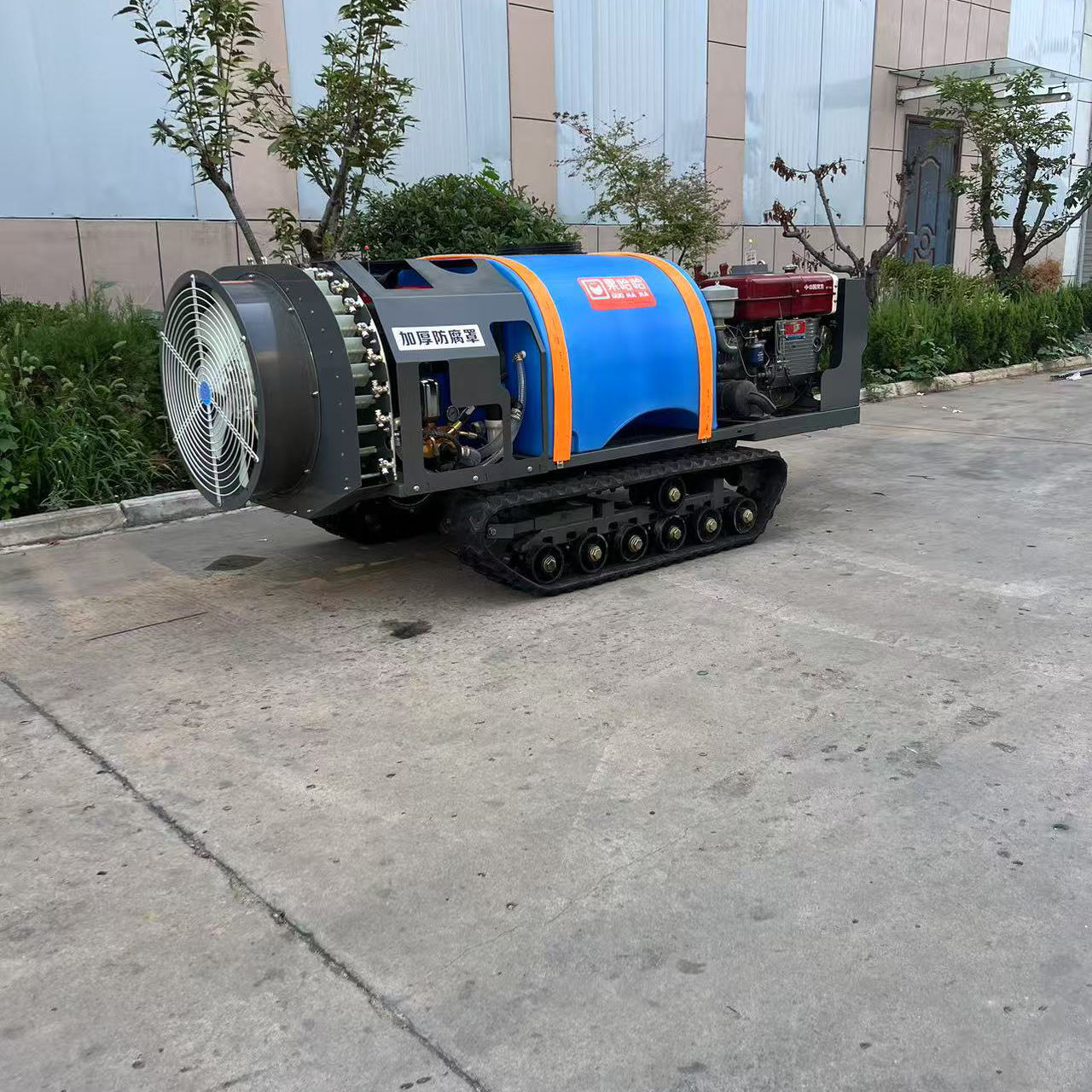
A rubber track on an orchard crawler is expected to last 1,500 to 2,500 hours. The ones that fail early almost always fail for one of four reasons: tension, sprocket wear, misalignment or contaminated bearings. All four are visible long before the track splits.
Measure tension cold, on level ground
Track tension is set with the machine empty and parked on concrete. The correct sag is the figure in the manual, usually 10 mm to 20 mm at the midpoint of the longest unsupported run. Too tight and the track stretches and the idler bearing overheats; too loose and the track climbs the sprocket under load, which is how a track comes off on a slope.
- Sag check at the midpoint, cold, with the machine unloaded.
- Sprocket tooth thickness against the wear limit in the parts list.
- Track edge wear: a shiny inner edge means misalignment, not normal wear.
- Roller and idler play: any rocking movement means a bearing is on the way out.
Sprocket wear drives track wear
As sprocket teeth wear, the pitch effectively grows, and the track has to stretch to stay engaged. A sprocket at 30 percent tooth wear will shorten the life of a new track by a third. That is why the sprocket is usually replaced with the track, not after it.
Keep the undercarriage clean. Orchard soil is often a mix of clay and limestone dust; packed between the rollers and the track it acts as a grinding paste, and it holds moisture against the steel.
The track is the expensive part. The sprocket is the part that decides when you buy it.
What to log
Record hours, sag measurement, sprocket tooth thickness and any adjustment made. After three services the trend tells you more than any single reading: a track that needs adjusting every 100 hours is stretching, and stretching tracks do not recover.
When to replace rather than adjust
Three signs end the argument. A track that will not hold tension for a full day has a broken cord. A sprocket with teeth worn to a sharp point will damage a new track within weeks. A roller with visible seal leakage will seize before the next service. In all three cases adjustment only postpones the failure to a less convenient moment.
Replace tracks in pairs on the same axle. A new track beside a worn one makes the machine pull to one side, and the operator corrects with the steering the whole day without knowing why.
Keep a simple log on the machine, not in the office. A pencil mark on the frame with the hour reading of the last adjustment is enough, and it is the only record that survives a busy week. Replace the adjuster bolt if the thread is worn; a tension setting that drifts between checks is usually the bolt, not the track.
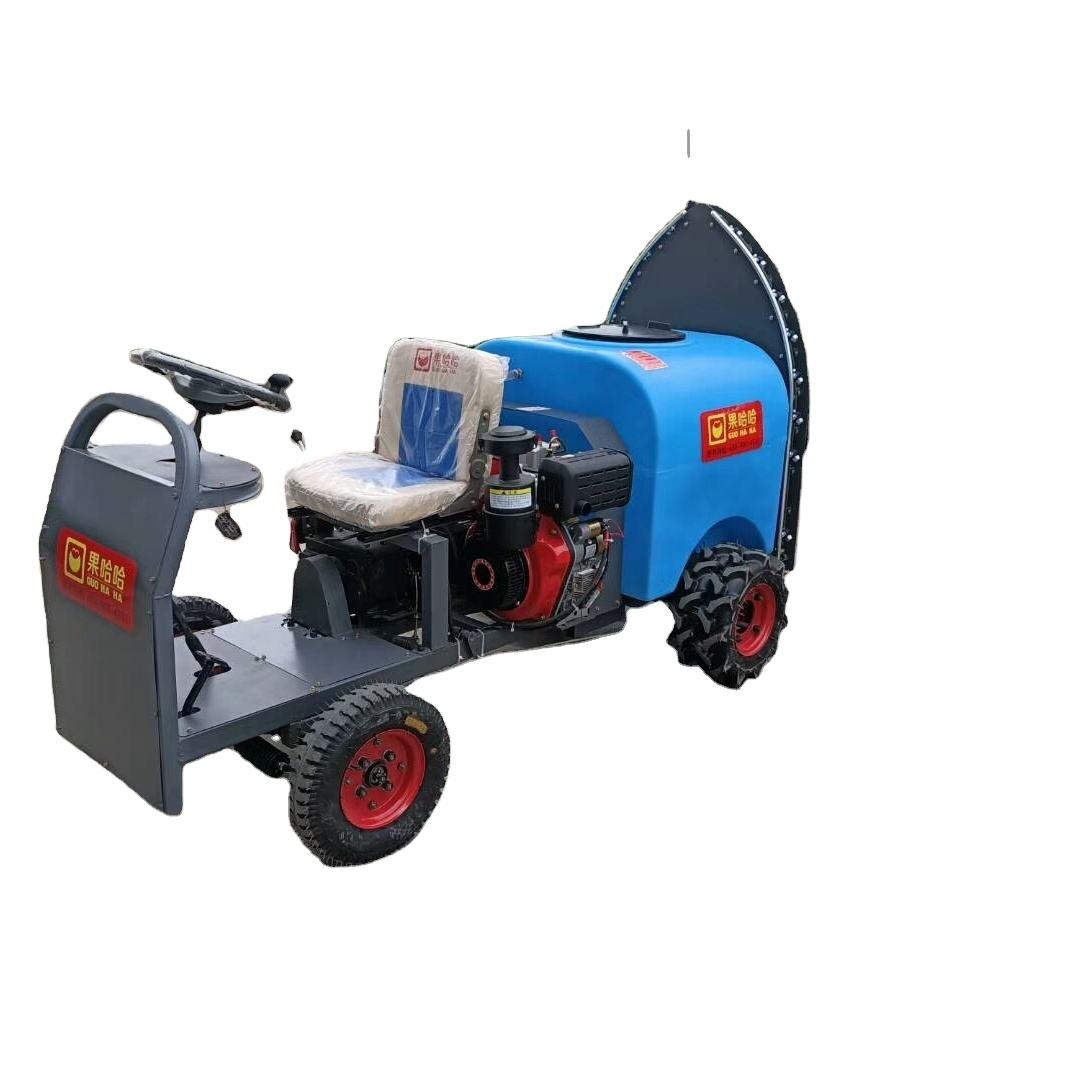
Tracks, sprockets, rollers and idlers are stocked as spare parts for the 300 L full-track and 1,000 L crawler models. Tell us your hour meter reading and we will send the matching parts list.