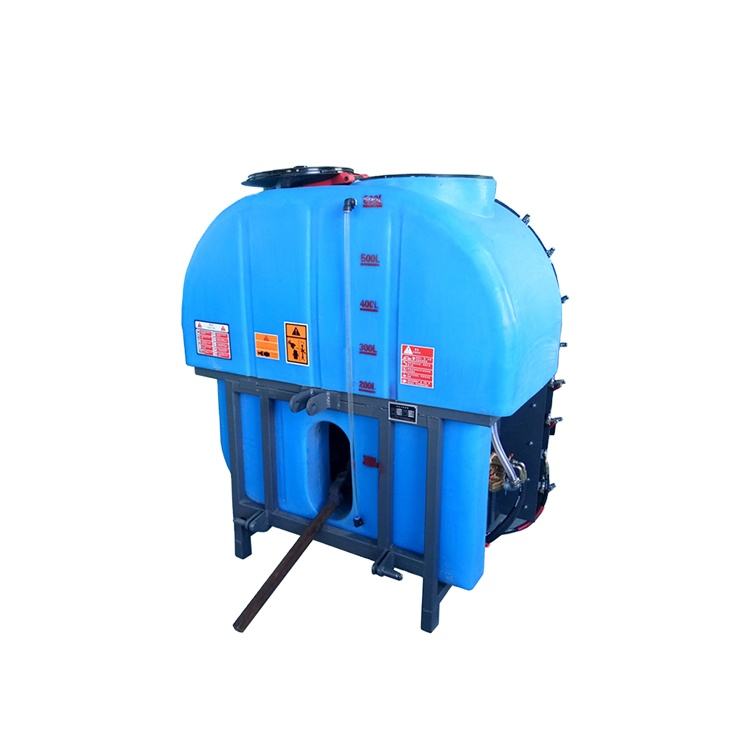
A three-point hitch sprayer is a lever on the back of the tractor. Every litre in the tank adds weight behind the rear axle, and every kilo behind the rear axle takes weight off the front wheels. That is the whole engineering problem, and it is why the same 600 L sprayer is comfortable on a 90 hp tractor and dangerous on a 45 hp one.
Start with lift capacity, not engine size
Hydraulic lift capacity at the link ends is usually quoted at 610 mm behind the pins. A 600 L tank full of water weighs about 640 kg with the frame, pump and empty boom; add the boom's own weight and you are at roughly 750 kg. A tractor rated 1,000 kg at the links handles that with margin, one rated 800 kg does not.
- Full tank weight equals litres plus roughly 15 percent for frame, pump and fittings.
- Keep at least 20 percent of the tractor's weight on the front axle when loaded.
- Check the PTO rating against pump demand, not against the engine badge.
The PTO and the pump do not grow together
A 45 hp tractor has enough PTO power for a 60 L/min diaphragm pump but not for a 100 L/min plunger pump at 20 bar. If you specify the larger pump, the relief valve opens at working pressure and the pattern collapses at the far end of the boom. Match the pump to the tractor first, then choose the tank that the pump can agitate.
Agitation is the part most buyers forget. A 600 L tank needs enough return flow to keep wettable powder in suspension without foaming; that is a function of pump size and nozzle placement, not tank shape.
A mounted sprayer is a counterweight you did not plan for. Make sure it is the counterweight you want.
For smaller tractors, choose the smaller frame
Below 60 hp, a 200 L to 400 L machine keeps the combination balanced and still covers a 20 hectare orchard with three fills a day. Above that, 500 L to 600 L with a two-stage boom is the practical ceiling before front weights become mandatory.
Ballast and front weights
When a mounted sprayer takes weight off the front axle, the usual answer is front weights. That works, but it adds total mass and fuel use. A better answer, where the tractor allows it, is to move the sprayer closer to the links with a shorter frame, or to run the tank half full on road moves and refill on site.
Check the axle loads rather than guessing. Most tractor manuals give maximum front and rear axle loads and the minimum front axle share; a farm with a weighbridge can confirm the combination in ten minutes and avoid a steering failure at speed.
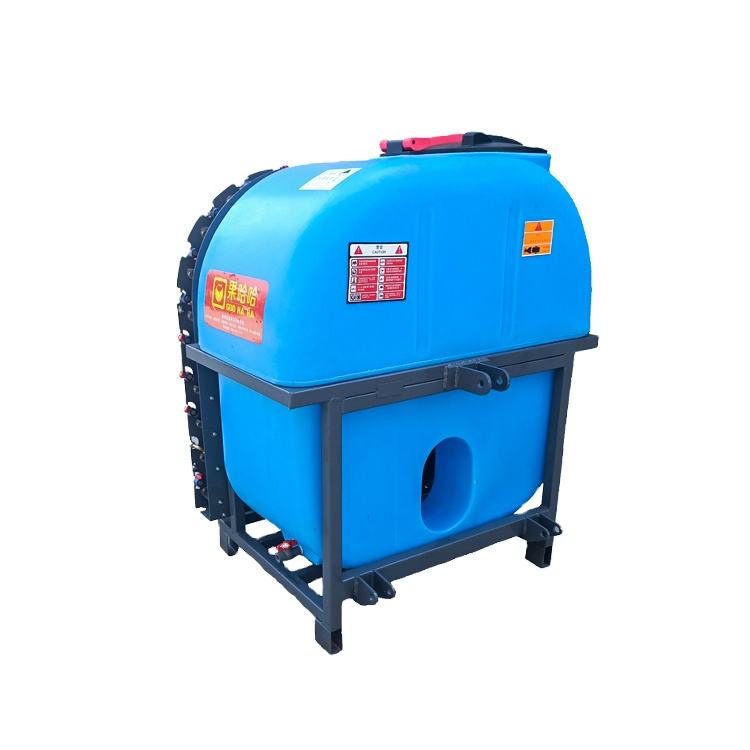
One last check before ordering: measure the distance from the link pins to the tank's rear face. On short tractors a deep tank fouls the rear tyres at full lock, and no amount of lift capacity solves a steering angle problem.
Send us the tractor model and its lift capacity, and we will confirm the tank. Compare the 600 L hitch sprayer with the 400 L version.